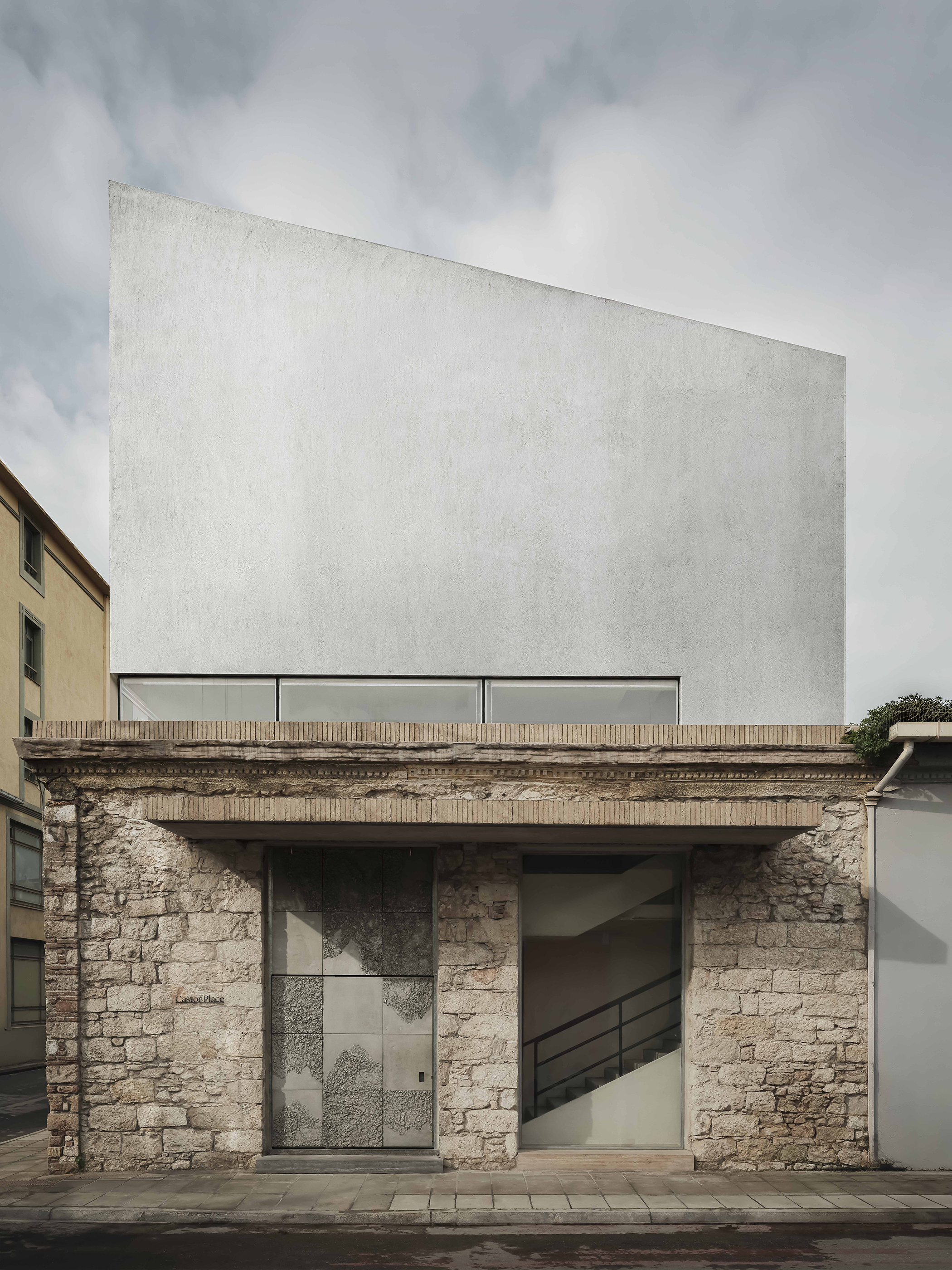
Castor Place takes its name from Kastoros Street, itself derived from Castor of Ancient Greek mythology. Castor’s statue also lent us the symbol for Castor Place’s logo. The idea of duality and transformation, central to Castor’s mythological fate subtly informs the venue: a space with a past, reimagined for contemporary cultural use.
A former 19th-century structure situated within a historic Piraeus city block and originally used for storage was reinvented into a dynamic, multi-use venue capable of hosting lectures, receptions, art exhibitions, dance performances, and theater productions.
The building bore the marks of an improvised evolution. The original masonry structure from the 1850s, characterized by thick load-bearing walls worn and scarred by time, had undergone a makeshift alteration in the 1990s with the addition of a massive two-story metal extension.
History
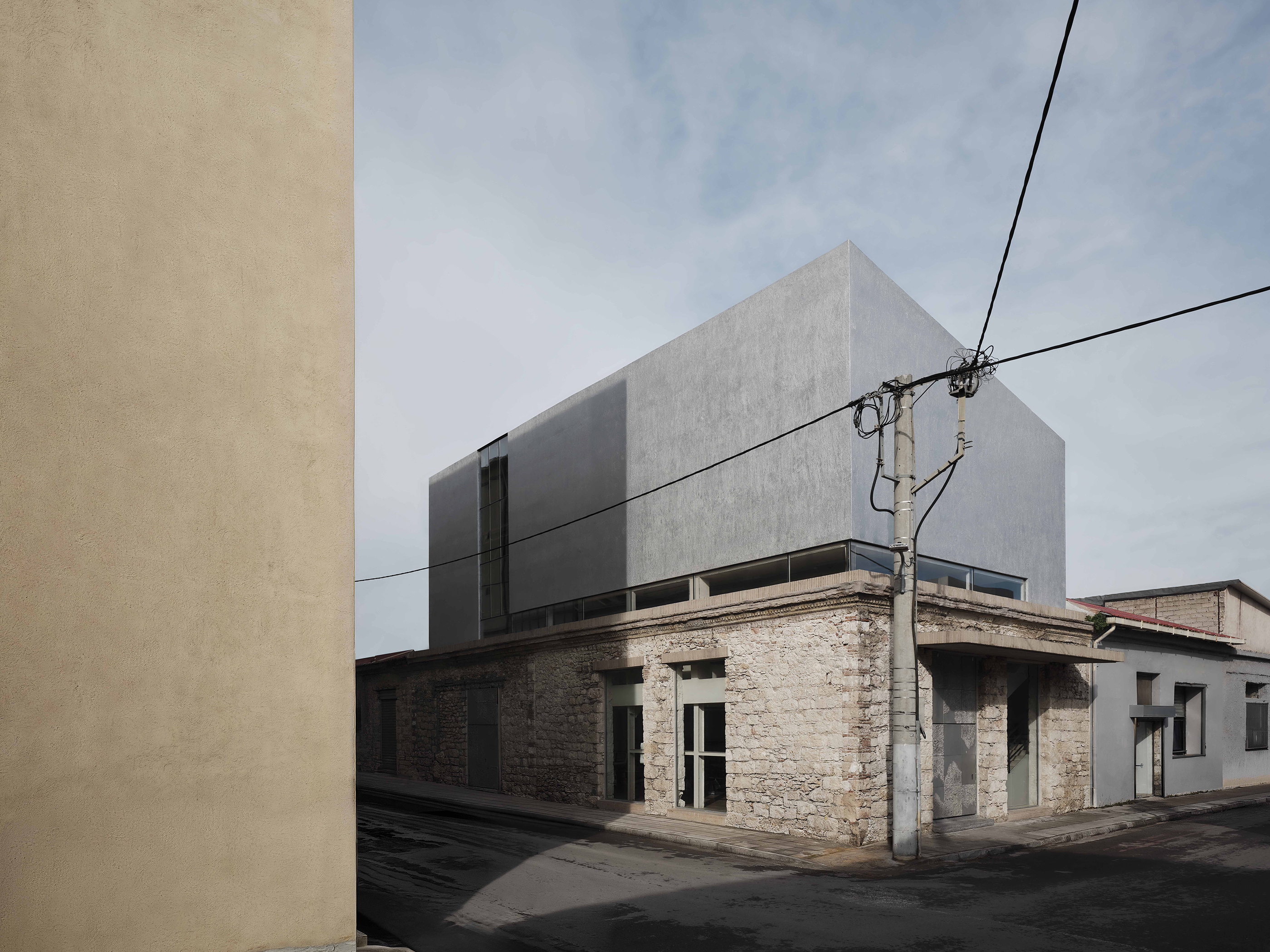
Previously operating as a dark, inward-facing nightclub, the interior was redefined by Manhattan Projects architects as an open, welcoming environment.
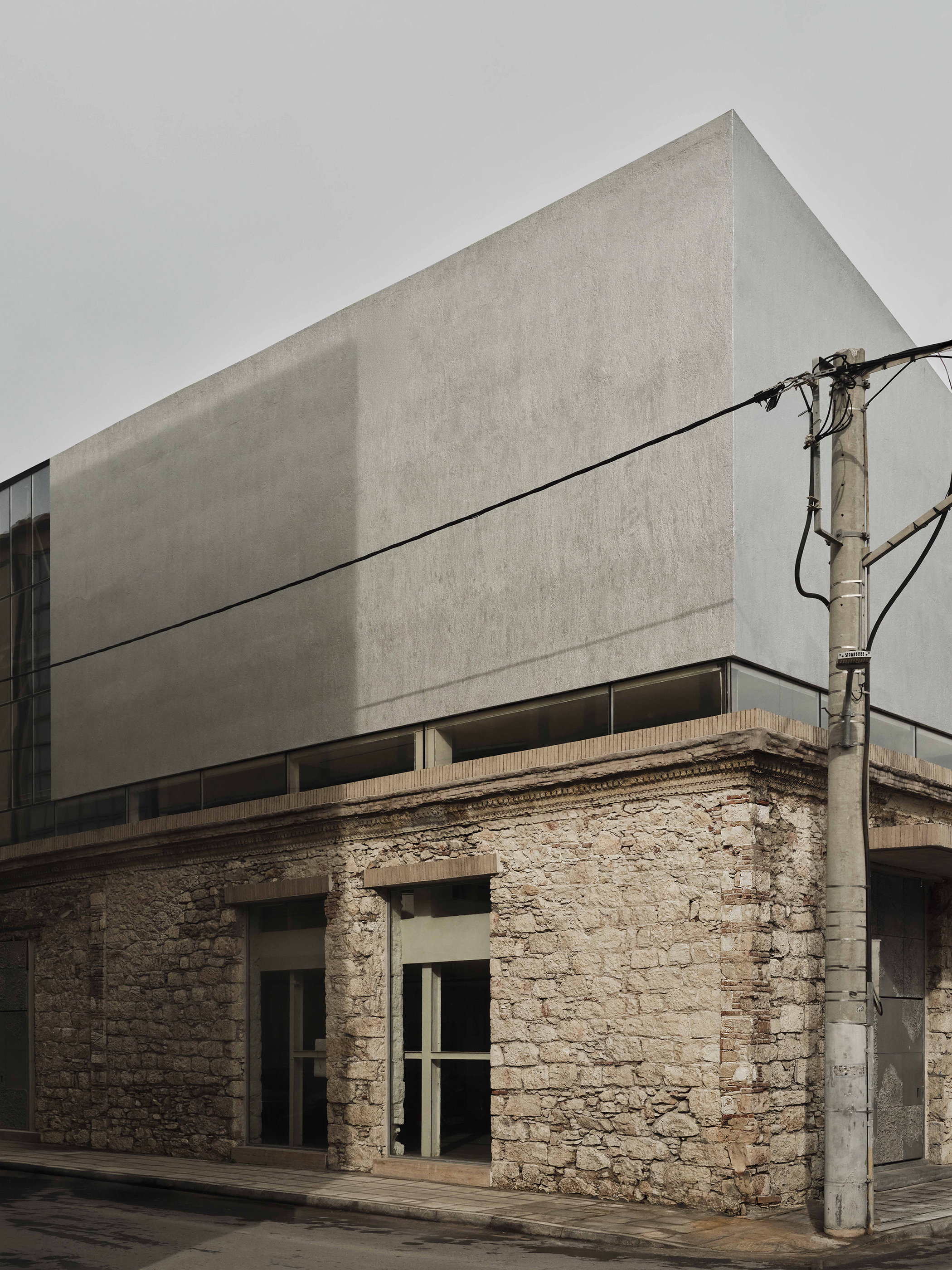
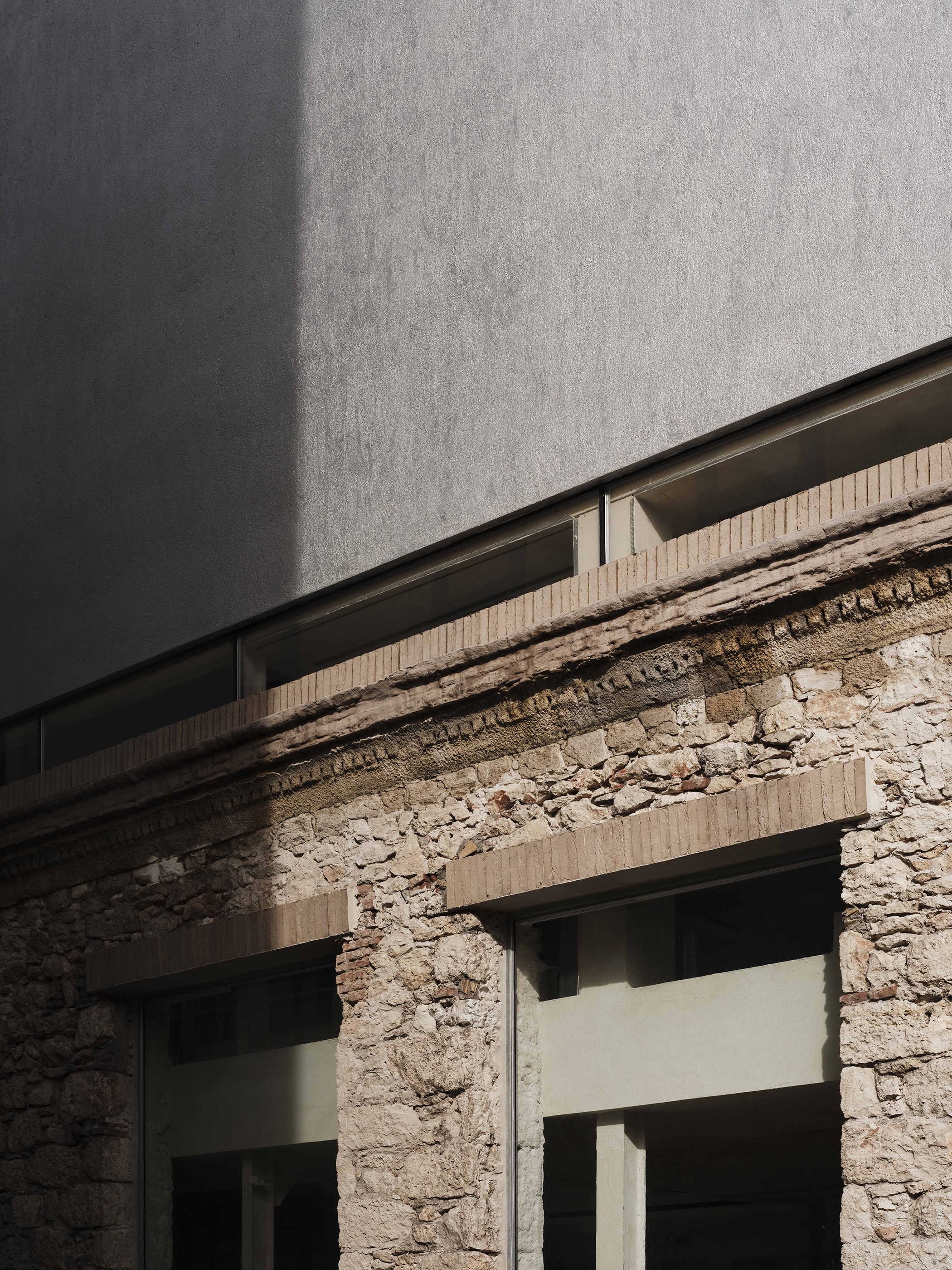
The intervention focused on clarity, flexibility, and light. By stripping back unnecessary layers and introducing restrained contemporary elements, the architecture now functions as a neutral yet characterful framework.
Their design strategy operated in an in-between condition—closer to “surgical archaeology” than conventional architecture.
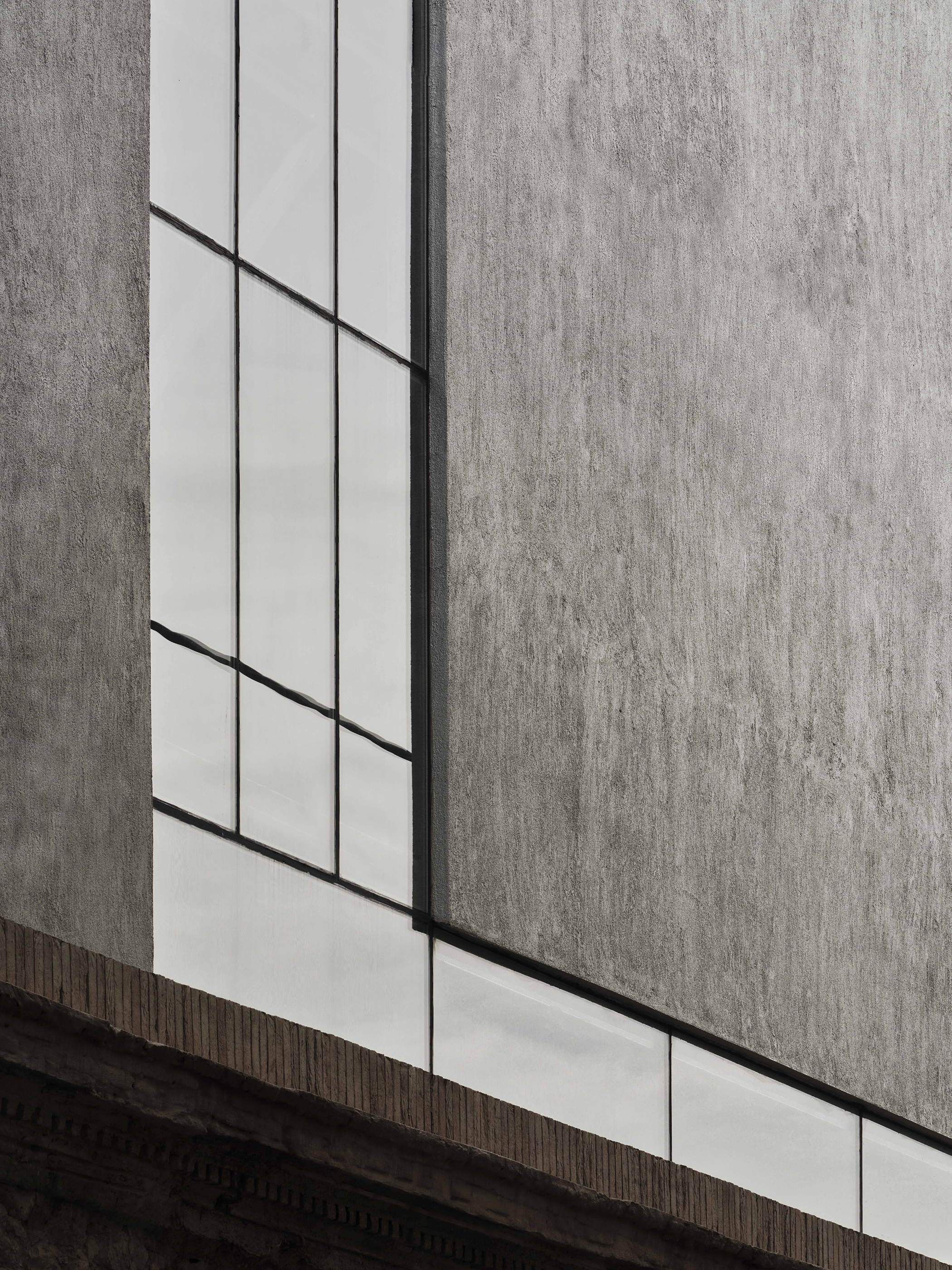
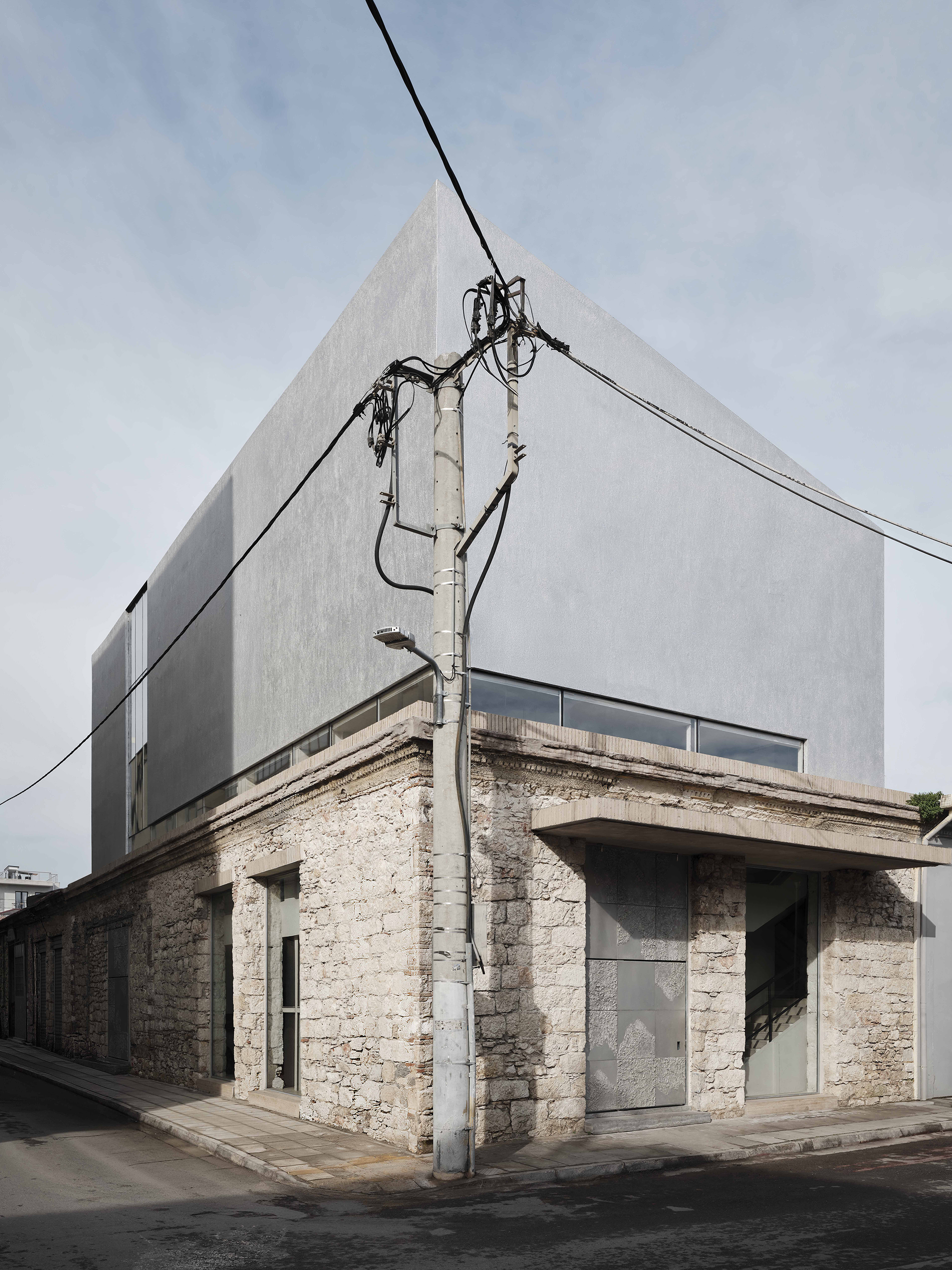
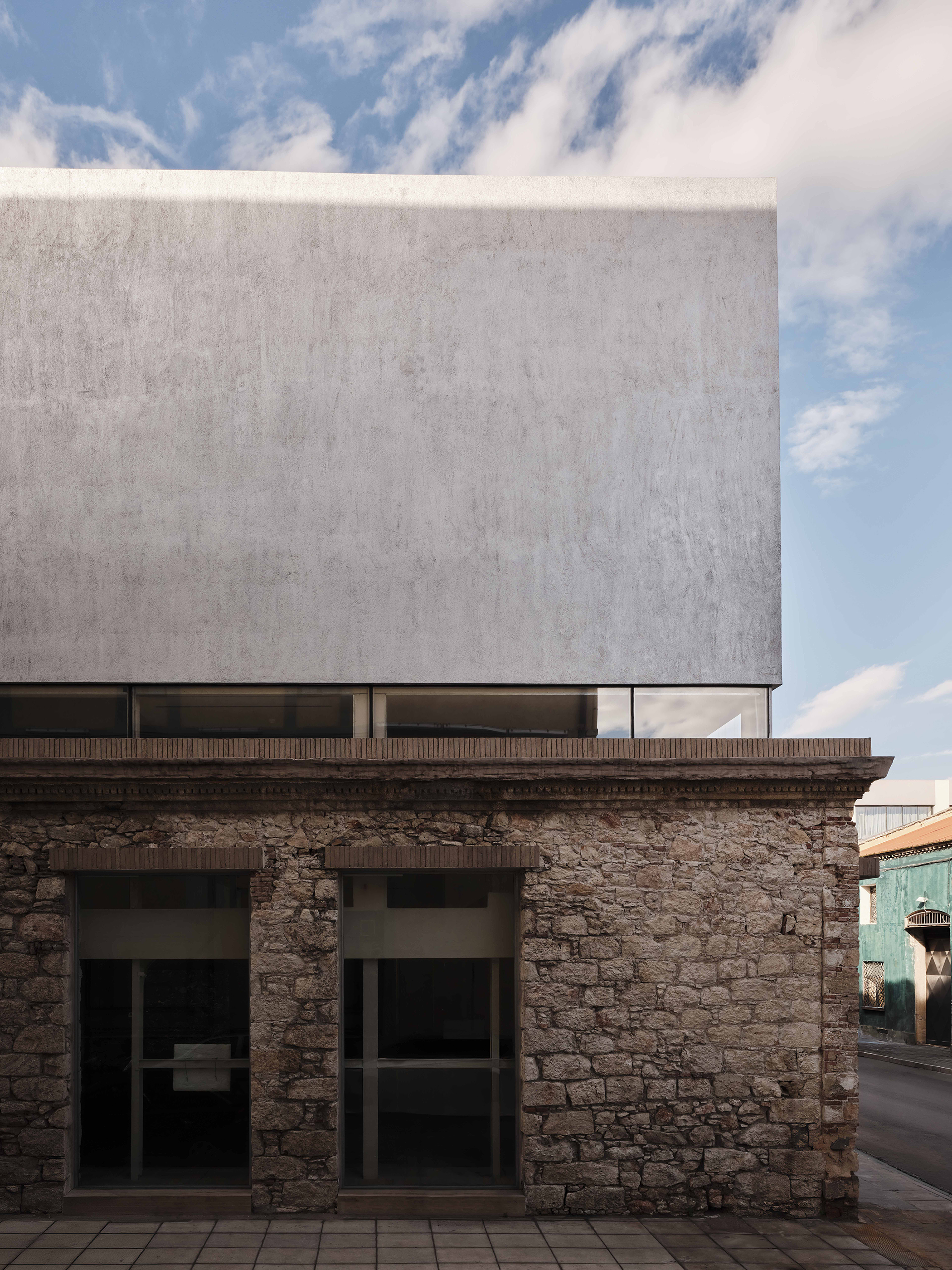
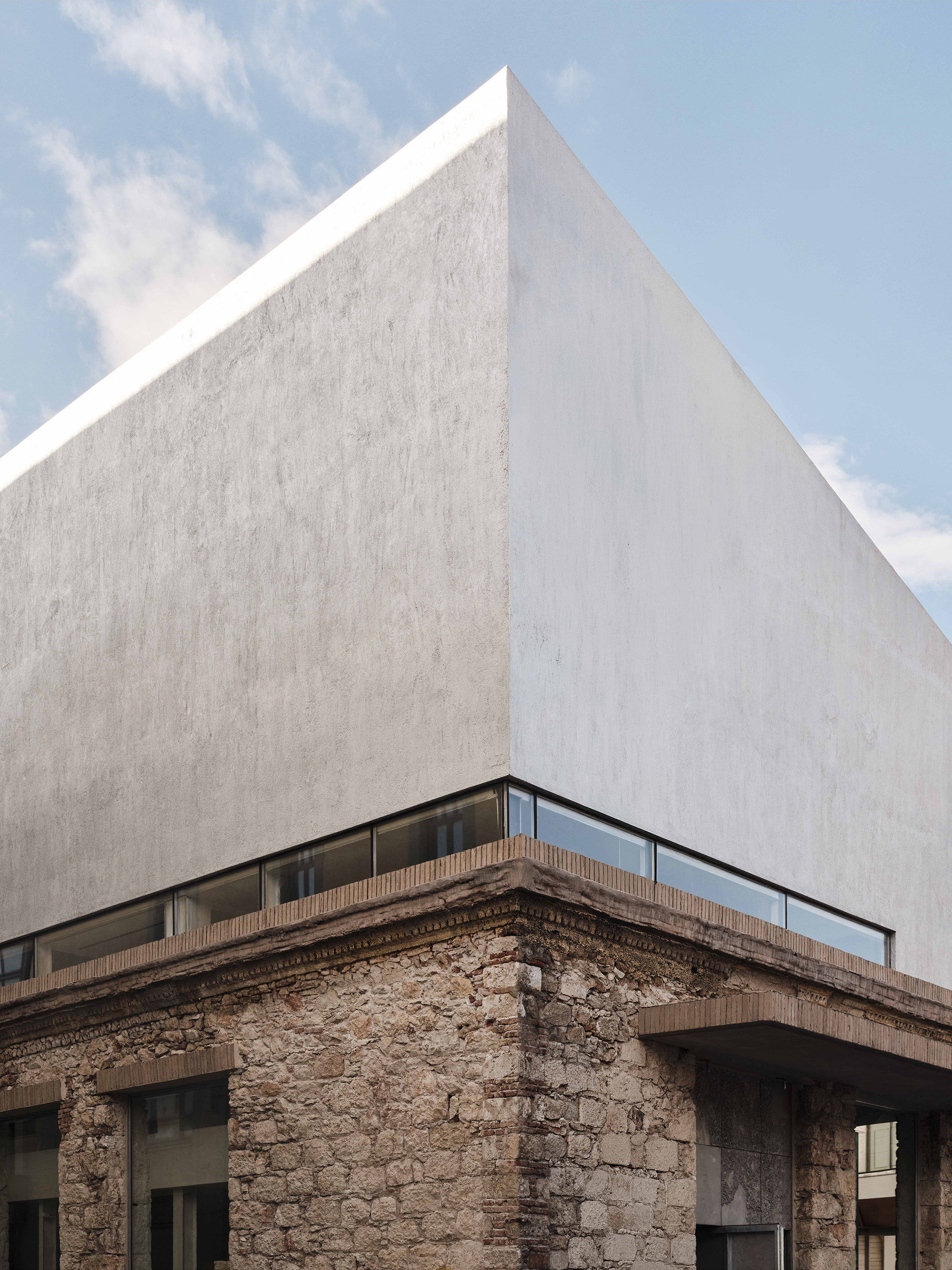
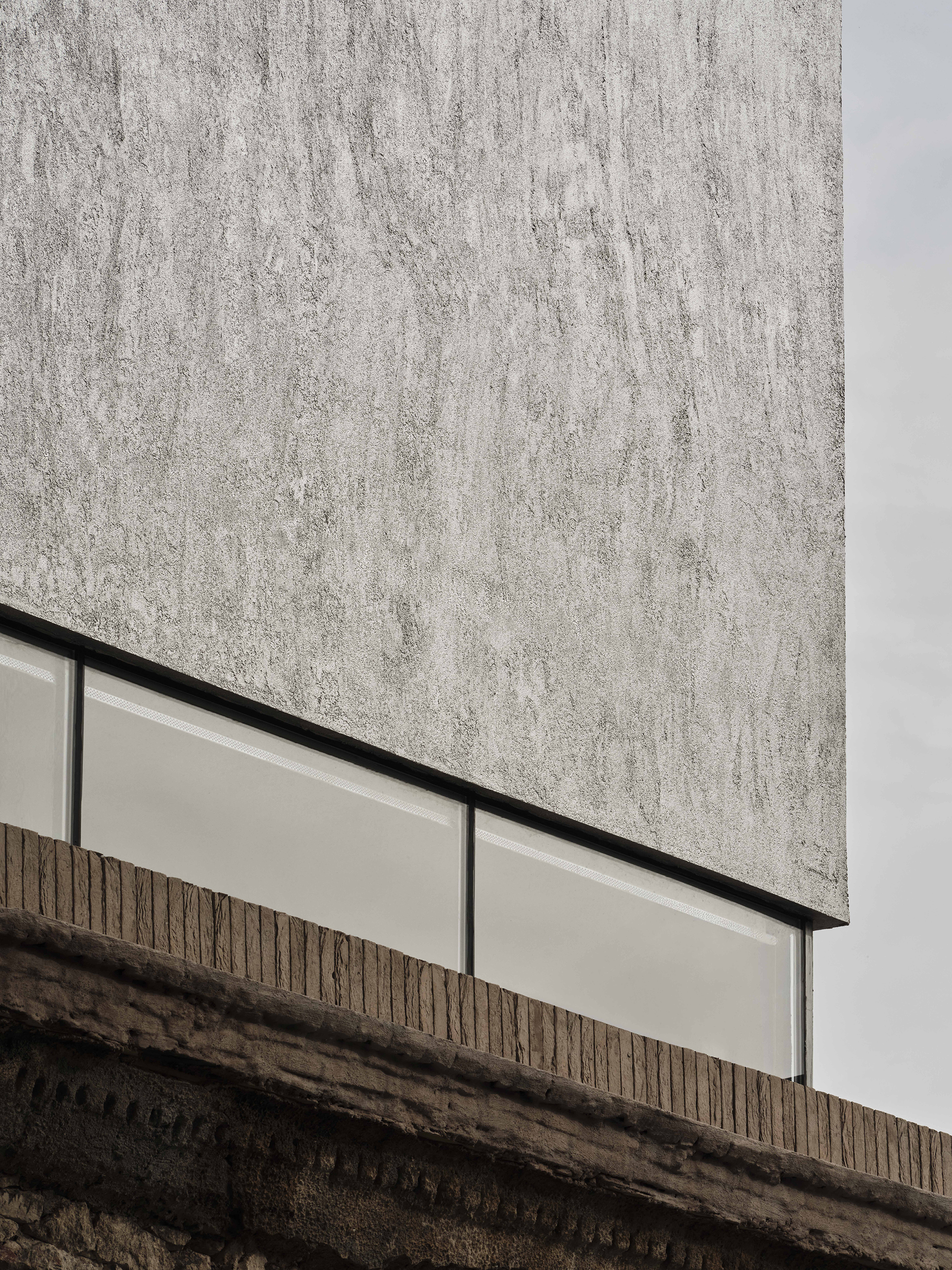
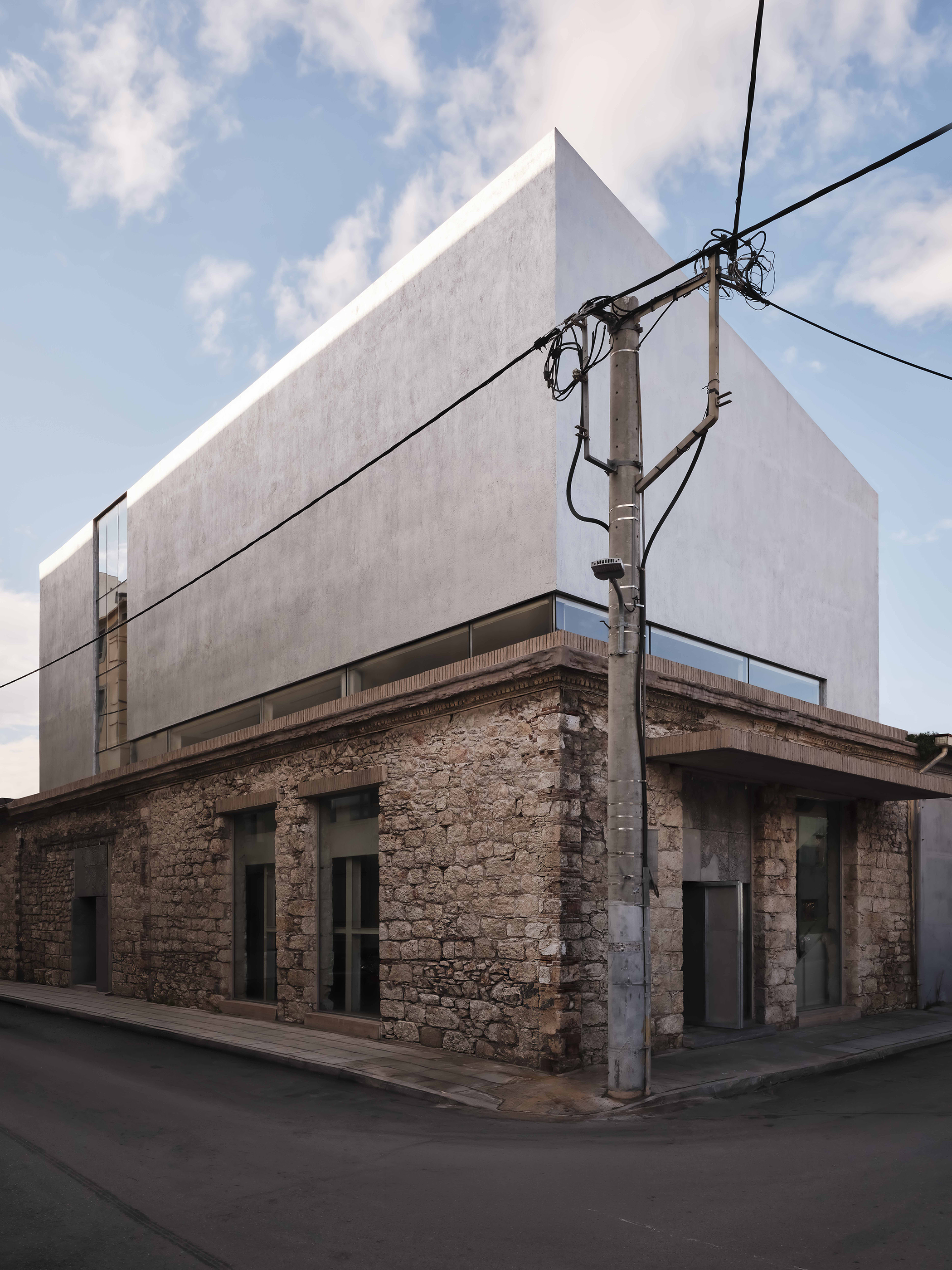
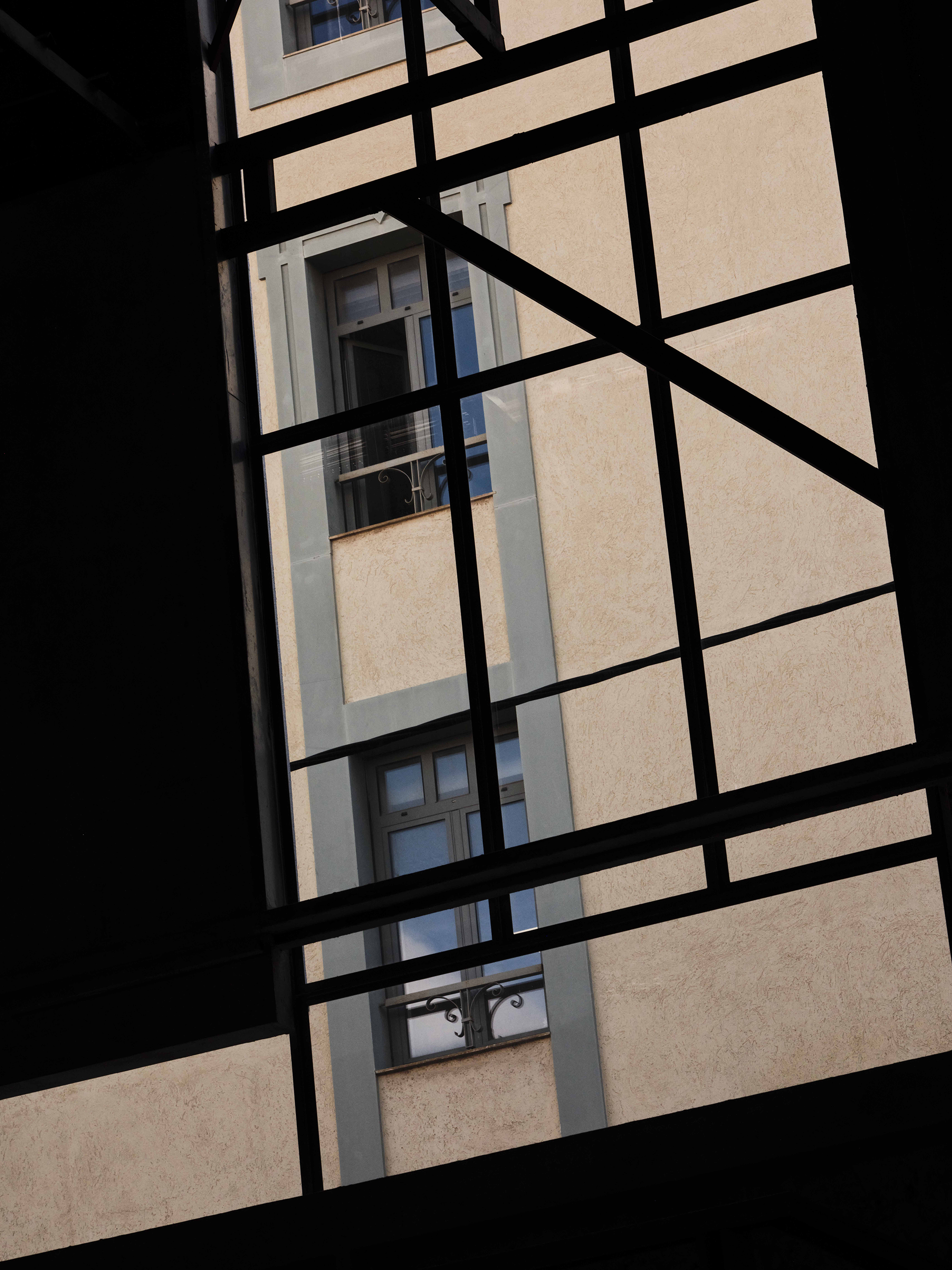
To visually separate the two eras of the building, a slender clerestory window was introduced that gives the impression that the upper volume levitates just above the original building’s cornice. This feature culminates in a dramatic nine-meter-tall vertical window, a cathedral-like glass opening that floods the interior with natural light while offering glimpses of the towering space within.
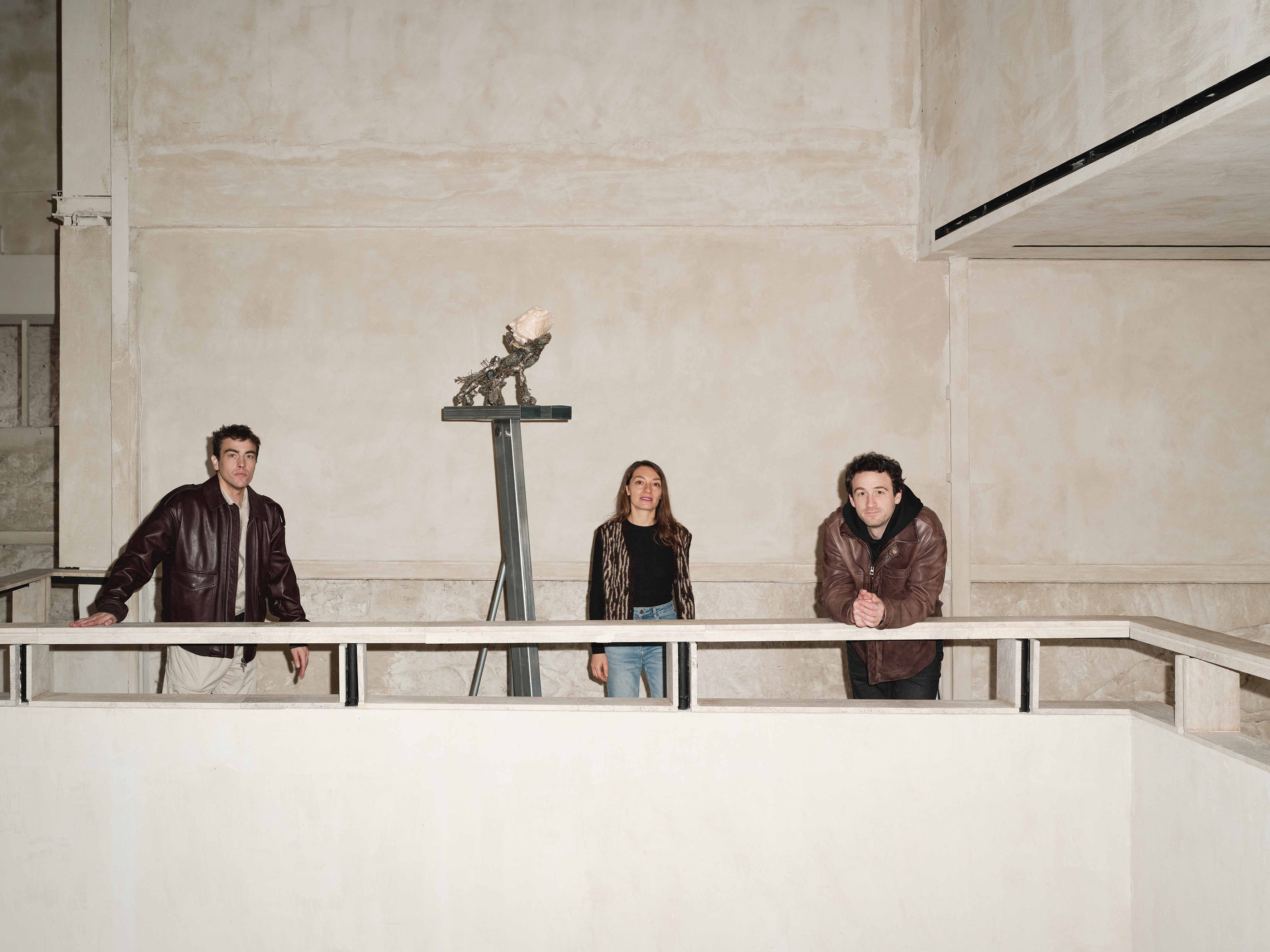
Inside, the approach shifts toward unification. To bring coherence to the vast interior, a thin layer of the same material traditionally used as mortar for the original stone walls was applied. This architectural “whitewashing” turned the various damaged surfaces, structural bracing, metal panels and brick infill into a unified tonal surface, lending the space an abstracted, almost model-like quality.
Paradoxically, under this unifying layer, the variations and textures of the underlying materials become more pronounced, revealing the building’s history and the many “surgeries” it has undergone over the decades.
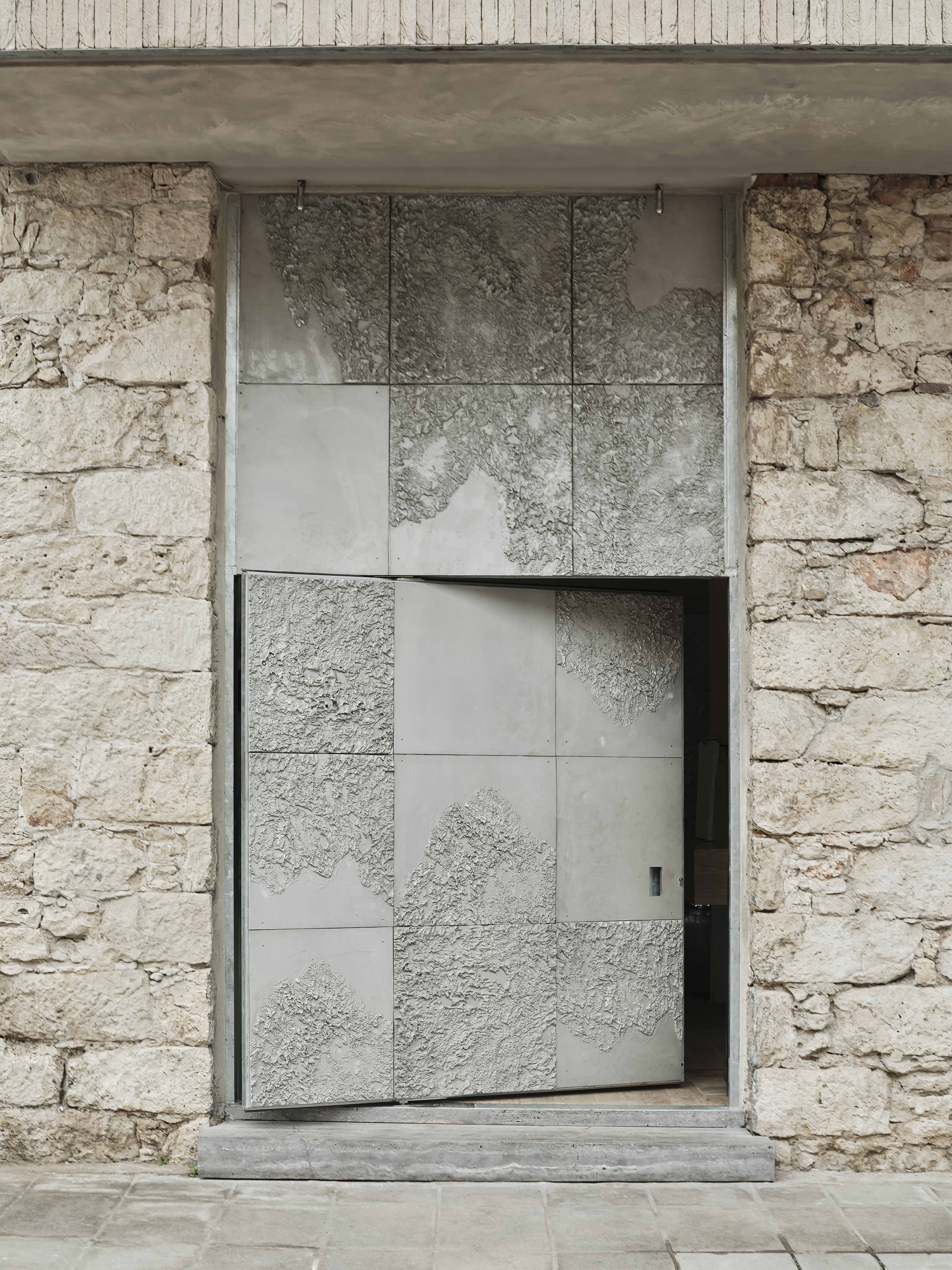
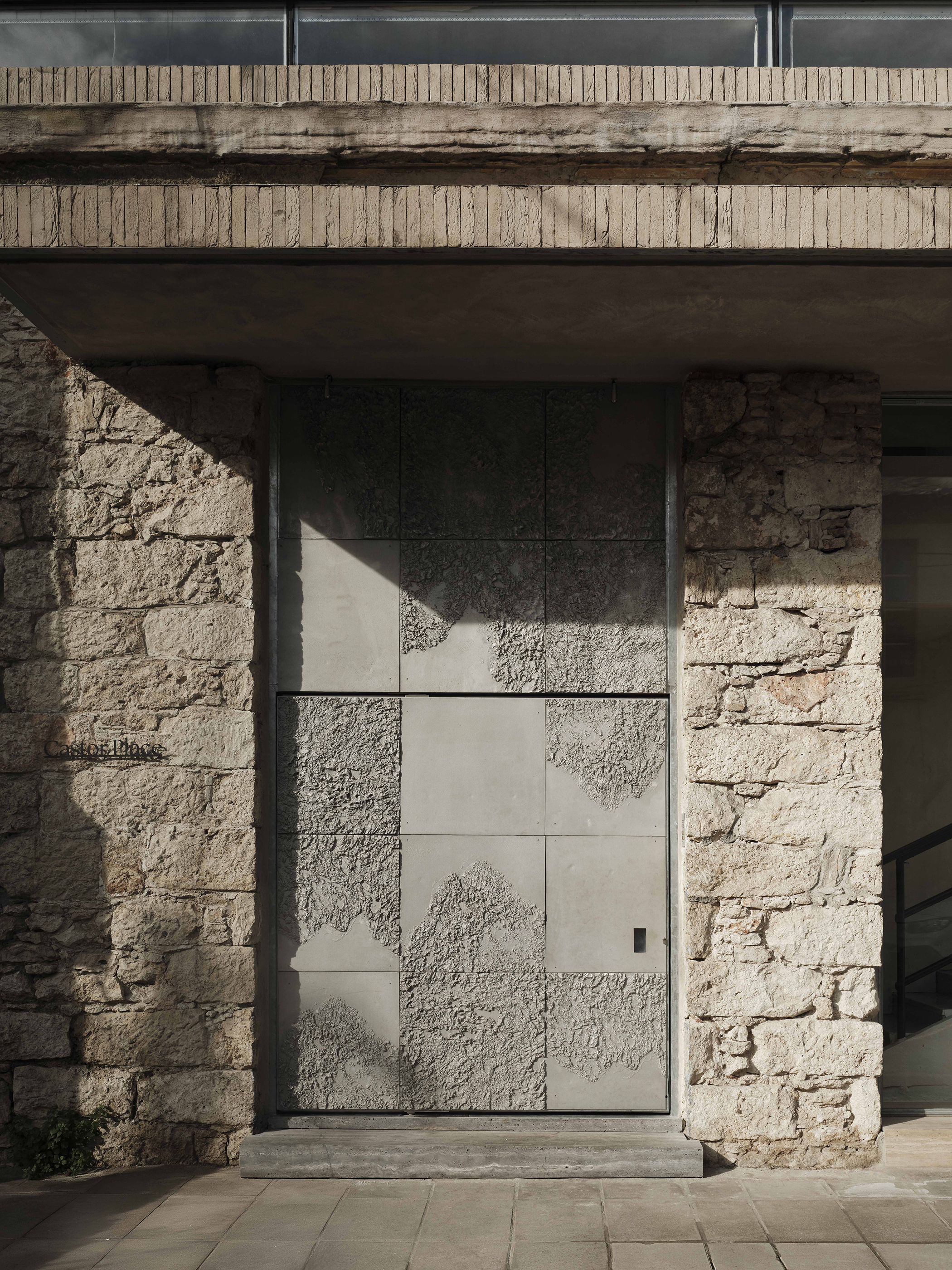
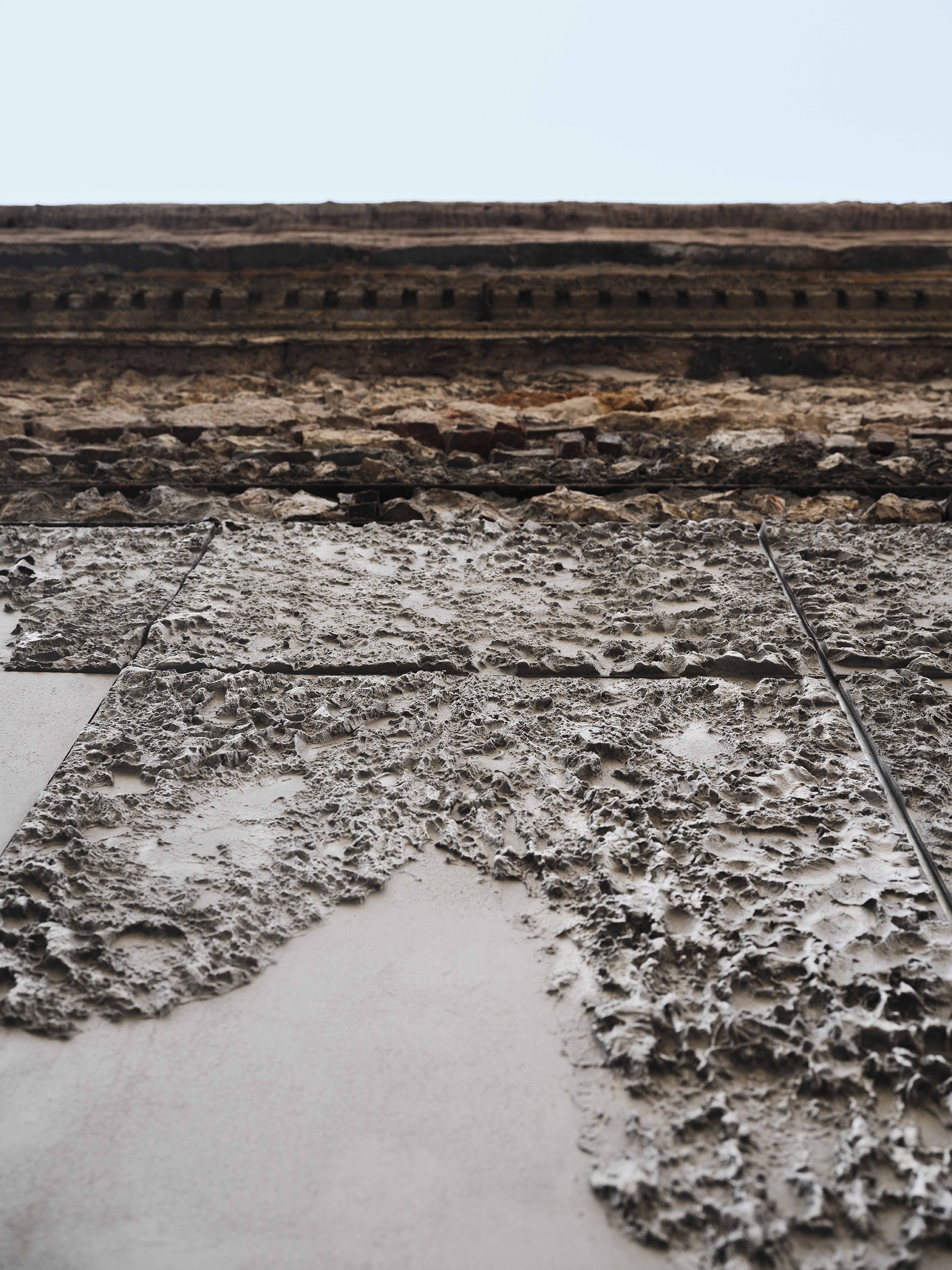
Artist Stefania Strouza was commissioned to create a pair of monumental cast-aluminum doors for the venue. Drawing inspiration from the building’s proximity to the maritime context of Piraeus, she developed an abstract pattern whose textures evoke liquid topographies and the movement of ocean waves and created them from cast aluminum.
The building’s metal skeleton was used as a source of illumination both for architectural lighting and atmospheric event lighting. A state of the art sound system was discreetly installed in the space so as not to interfere with the architecture.